
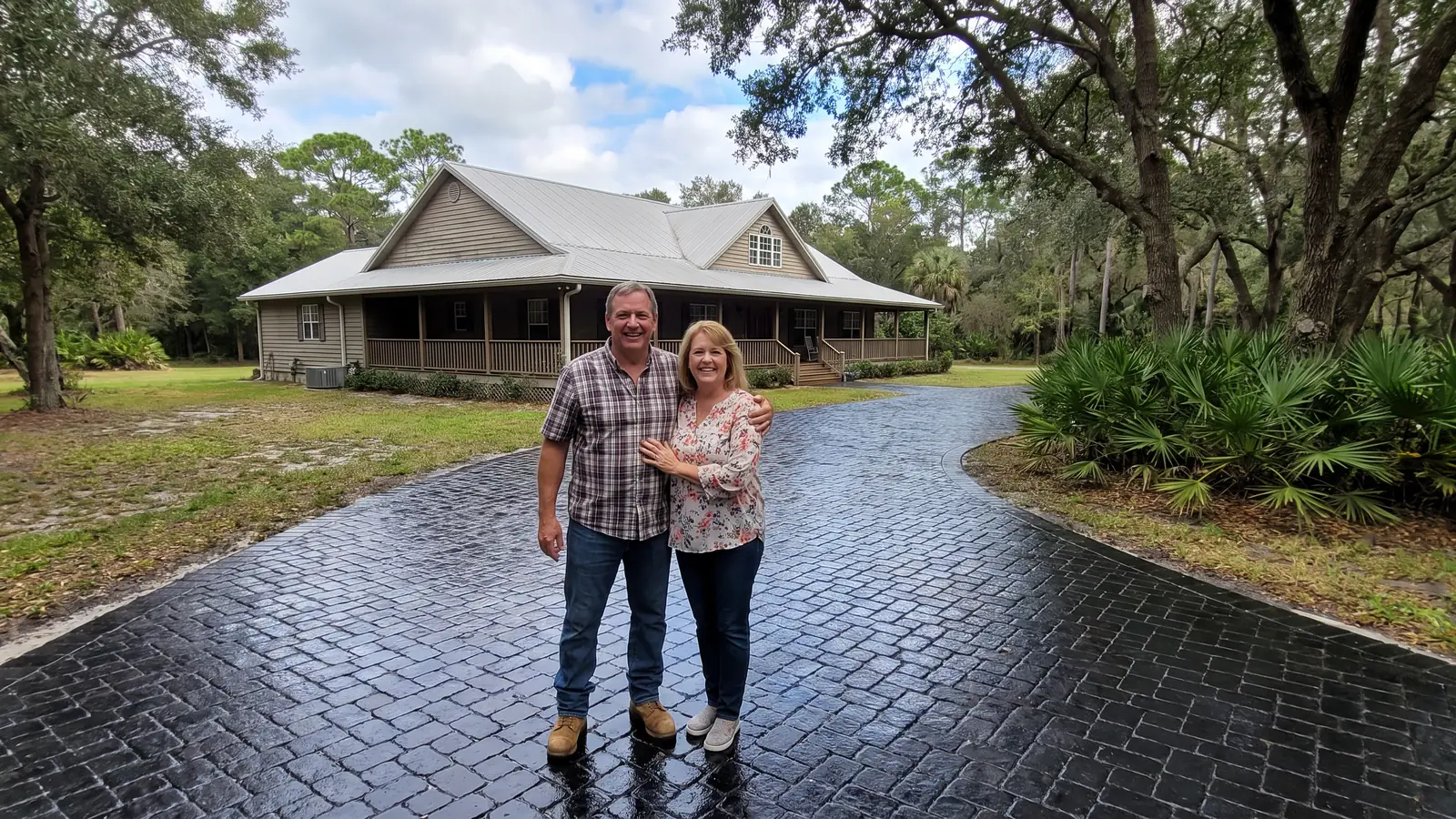
Paver sealing for Whitehouse homes
Paver Sealing in Whitehouse, FL
Whitehouse homes near Camp Milton and Whitehouse Park can get pavers cleaned and sealed, with a free estimate at (904) 842-3763.
- Brings out deeper paver color
- Fresh joint sand helps lock pavers in place
- Gives weeds less room to grow
- Makes the surface easier to keep clean
- Free estimate, no obligation
Request a Free Estimate
Free, no obligation.
Fast, careful paver sealing in Whitehouse
Paver sealing in Whitehouse starts with a free estimate for your driveway, walkway or patio. A local contractor does the wash, the sand refill and the sealing on Whitehouse drives, walks and patios. Send your request with ask for a free estimate online and expect a reply within 1 business day, usually much sooner.
Think of a driveway that has bleached to a dull tan, with tufts of grass in the seams and an orange streak where the sprinkler lands, so the whole front yard looks tired. After a wash, new sand and a coat of sealer, it goes back to a single even shade. If you would rather talk first, call (904) 842-3763 and describe the surface to the contractor.
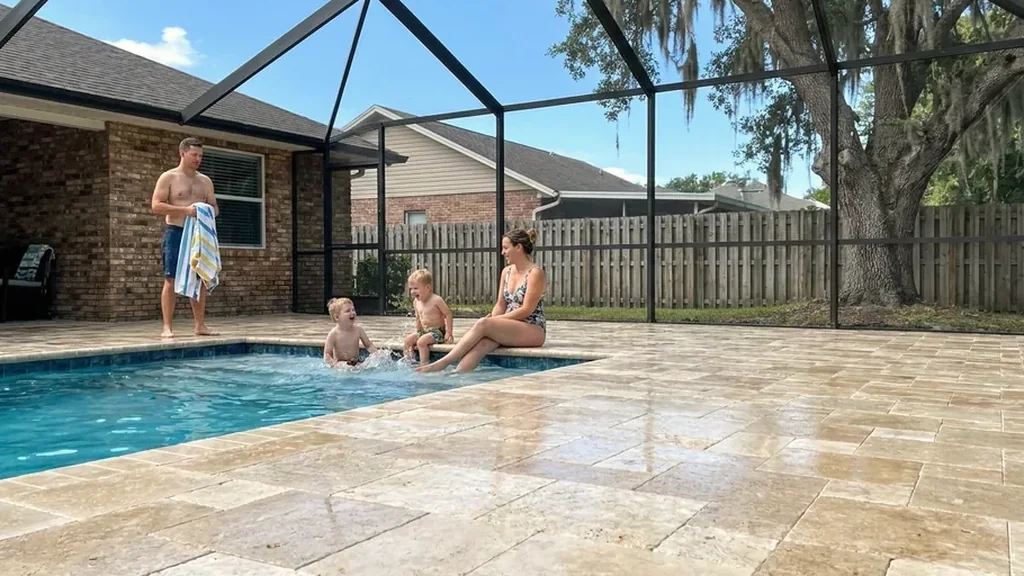
Why hire a local paver sealing contractor in Whitehouse?
Whitehouse is a rural part of Jacksonville with sandy flatwoods ground, wide lots, a creek nearby and open sky. To hear how that changes a paver job, call (904) 842-3763.
A visit at no charge
The contractor comes to your Whitehouse property, measures the pavers and puts a price in writing before anything starts.
A range to compare
Across Northeast Florida the published range is $1.75 to $3.25 per square foot to clean, sand and seal. Hold each Whitehouse bid against it.
Natural or glossy
Matte leaves pavers looking natural, while a wet look deepens color. Choose the one that fits your yard, then ask how each wears.
No strings attached
The estimate leaves you free to decide. You pick the day, the finish and whether to hire anyone at all.
Get Your Free Estimate in Whitehouse
Tell us about your pavers in Whitehouse.
Free, no obligation
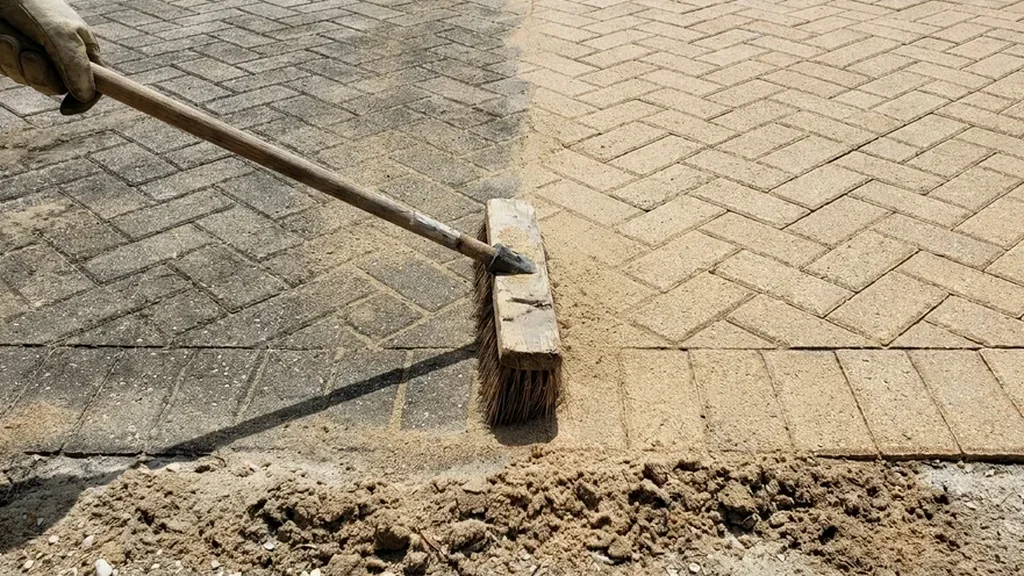
What paver problems show up most in Whitehouse?
Sand that will not stay put
The USDA describes the Myakka soil series as poorly drained sand on flatwoods, with a water table near the surface for one to four months in most years. That is a regional soil fact, not a survey of your yard. Sandy flatwoods ground drains fast in dry spells and holds water in wet ones, and summer brings most of the year's rain. Either way, joint sand moves, and open joints let in soil and weeds. Sealing after fresh sand goes in holds the joints together through the next wet season. Plan on a check of the joints each spring. On flatwoods ground the surface can look fine one week and washed out the next. A refilled, sealed joint stays put far longer than loose sand does, which is the reason the two jobs are done together. Checking the seams once a year, before the wet months, catches problems early.
Rust from well irrigation
Whitehouse is classed as rural by population density, and rural yards often water from a well. University of Florida extension says most Florida well water is high in iron, and irrigating with it often leaves orange stains. Look for rust lines where the spray lands on your pavers. A Jacksonville company treats rust before it seals, though a deep stain may linger faintly. Aiming the heads off the pavers helps keep fresh rust lines from forming. A simple water test shows how much iron your well carries. Moving a hose reel or two ahead of the visit saves time. Rust shows best on light pavers, and it builds with every watering. If your sprinkler hits the walk, aiming it a few inches lower or shorter protects the next coat.
Grass and weeds in open yards
Wide lots mean long edges where lawn meets paver, and every foot of edge is a place for grass to start. Landscape trade guidance says weeds appear where joints have widened and lost their sand. Ants, a Jacksonville paver company says, need loose joint sand. Refilled, sealed joints leave both less room to settle in, which means fewer weeds to pull between visits. A neat edge also keeps mowers from throwing sand out of the joints. A flat, open Whitehouse drive shows the loss quickly because nothing blocks the runoff. Mowing along the edge leaves a clean line, but a gap between lawn and paver still collects clippings that hold moisture. Brushing the edge clear before the visit helps the contractor see the real joint.
Pavers from many different years
Whitehouse homes were mostly built between 1970 and 1999, with newer ones since then, so paver surfaces were added at many different times by many different owners. Some may carry a coat nobody wrote down, and a few may never have been sealed at all. Mixing the two sealer types fails, because water-based will not bond over solvent-based. Sealteam Jax says pavers sealed with an oil-based product must be stripped first, which changes the work and the price. Any brand name or photo from the past job helps the contractor choose the right product. Look for gaps between the pavers and the lawn edge, since that is where it starts. A driveway added to a 1980s house is a common story out here, and the seller often cannot say what was used. A test spot on the surface gives the contractor an answer in minutes.
Fade from open sun
July in Jacksonville brings highs near 92 degrees on average. A paver company here says sun fades unsealed concrete pavers within three to five years. A long, unshaded Whitehouse drive takes all of it, day after day. Sealer works like sunscreen for the color on a sunny drive, so a new coat slows the fade. The color also looks fuller, since sealer deepens the tone of most pavers. The July sun here is strong, and sealer slows the fade. Pavers that fade unevenly show the sun's path across the yard, with the brightest strip nearest the street. A fresh coat evens that out.
What kind of homes and lots does paver sealing in Whitehouse cover?
It covers mostly single-family homes on rural lots, with some mobile homes, spread across a ZIP of about 38 square miles of land that keeps its rural feel. ZIP 32220 had 13,037 residents in 2020, and most of the housing is owner occupied. Open lots mean long drives and wide walks, and that means more square feet to clean, sand and seal. Share what your lot looks like when you ask for a free estimate online.
Most Whitehouse homes were built from 1970 to 1999, and some date to the 1960s or to the 2000s. A paver driveway on a 1980s home was probably added by a later owner, and the sealer history may be a mystery to you and to the contractor. Sealer type matters too, since water-based will not go over solvent-based. Call (904) 842-3763 and share whatever you know about your pavers.
Whitehouse Park on General Avenue covers almost 18 acres and sits beside Whitehouse Elementary, with lighted ball fields and courts. Streets around it hold some older homes, and the school itself dates to 1926. If you live near either, say so when you ask for a free estimate online, since that helps the contractor place your street.
What does paver sealing cost in Whitehouse?
Whitehouse bids should land near the regional $1.75 to $3.25 per square foot for the full clean, sand and seal. A Whitehouse job moves inside that range with its size, the state of the joints, how dirty the surface is and any old sealer that must be stripped. Wide lots mean more square feet, which raises the total but can lower the rate per foot. For a Whitehouse price based on your square footage, ask for a free estimate online, and the estimate is free.
Rural property brings its own price questions. A long straight drive is quick to work, but a gate, a tight turn or a patio full of planters adds setup time. A cost guide says mixed surfaces and access trouble add prep. Call (904) 842-3763 and the contractor can say which of these apply to your Whitehouse property.
| Paved area | Typical example | Clean, sand and seal |
|---|---|---|
| 300 sq ft | Small patio or walkway | $525 to $975 |
| 600 sq ft | Two car driveway | $1,050 to $1,950 |
| 1,000 sq ft | Large driveway or pool deck | $1,750 to $3,250 |
| 1,500 sq ft | Driveway plus pool deck | $2,625 to $4,875 |
Math based on the $1.75 to $3.25 per square foot that Northeast Florida paver companies publish. Your contractor sets the actual price after seeing the surface. Repairs, leveling and stripping failed sealer are usually extra.
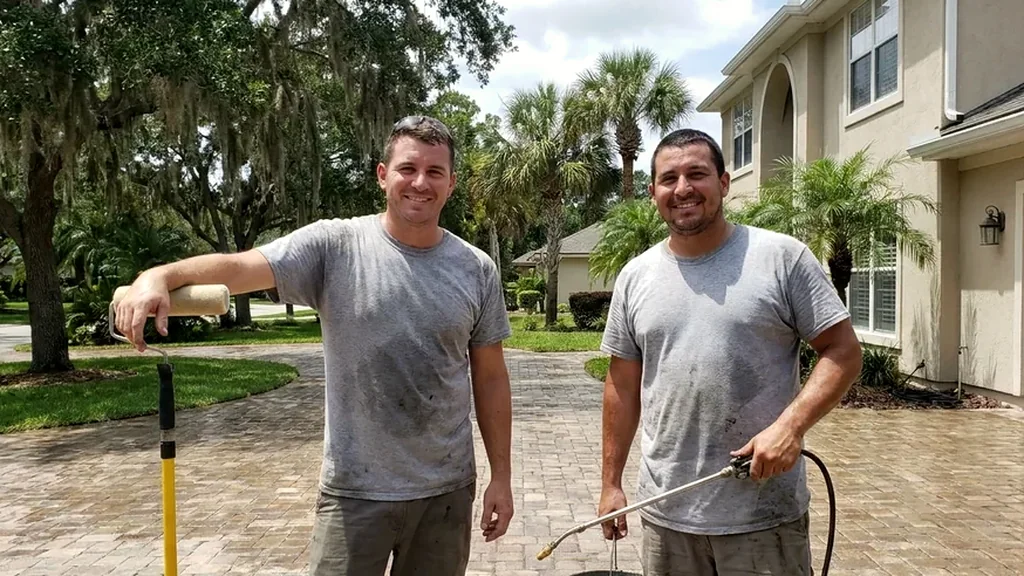
How does a paver sealing job work in Whitehouse?
Look it over
The contractor walks your pavers and your yard together. Where does rainwater run? Where does the sun sit all afternoon? Where has the sand gone? Sunken or lifted spots are reset first, because sealer would keep them as they are. Anything you recall about an earlier coat helps, since the two sealer types do not mix. Walking the edges together also shows where grass has crept in. A short list of questions about when the pavers went in makes the visit faster.
Scrub and treat
The pavers are scrubbed free of film, leaves and grass. Rust lines from a well sprinkler get special treatment before the main wash. A Jacksonville company says many such marks lighten a lot, though a deep one may linger. Rinse water is steered off plants where it can be. A quick sketch of your sprinkler layout helps the contractor know where to look. Grass roots between pavers are pulled or cut back during this stage, so the joints open cleanly for new sand.
Pack in new sand
Scrubbing takes the sand out, so fresh sand is swept in and packed. Sandy flatwoods ground sends rain through quickly, which empties unsealed joints. Full joints keep soil out and give ants and weeds less to work with. The sealer then binds the sand in place, and the seams stay tight through the wet months. On a wide Whitehouse drive this can mean a good number of bags of sand, so the contractor plans the amount ahead.
Let the ground dry
A manufacturer bulletin asks for a day of dry weather after cleaning or rain. On ground that stays wet, that can stretch. A Jacksonville paver company says damp pavers turn white or blotchy under sealer. So the contractor waits, even when the schedule is tight, and picks the next clear morning. Cool mornings after a dry night give the right conditions, and the contractor may start early to use them.
Lay down the coat
The finish goes on in thin, even passes. The sheen you picked shows once it dries. Quotes around here run two to five years between coats. Before the contractor leaves, get the product name written down, and keep it with your house papers for the next visit. The color you see after the first dry day is the color you will live with until the next coat.
Complete paver services in Whitehouse
Sealing in Whitehouse follows four moves: scrub, refill, dry and coat. The scrub removes film and dirt, and the refill puts sand back where the water took it. Drying is the move that surprises owners on wet ground. For a plan built around your lot, call (904) 842-3763.
A long drive carries tires and oil, while the walk to the front door picks up leaves and green film. A back patio or pool deck takes feet and furniture. Wide yards mean more edge where grass meets paver. Tell the contractor what you have when you ask for a free estimate online.
Sealer choice comes down to base and sheen. Water-based and solvent-based products do not mix, so an old coat on your pavers narrows the options. Matte looks natural and a wet look looks richer. Call (904) 842-3763 and ask which the contractor would pick for your home.
Wet seasons bring afternoon storms, and flatwoods ground holds the water. Dry stretches in winter give the contractor more room to work. A date can shift a day or two either way. To find a slot that fits your week, ask for a free estimate online.
Questions to ask before you hire
- How many days do I need to leave open for the job and the cure time?
- What should I see on the finished surface that tells me the job was done right?
- Is the quote one price for wash, sand and seal, or are they billed apart?
- If I live outside town on a long dirt drive, is there a trip charge?
- How long should I keep cars off the driveway after the sealer goes down?
- How do you handle pavers that have sunk or lifted near a tree root?
- Will a rain shower the night after the job hurt the finish?
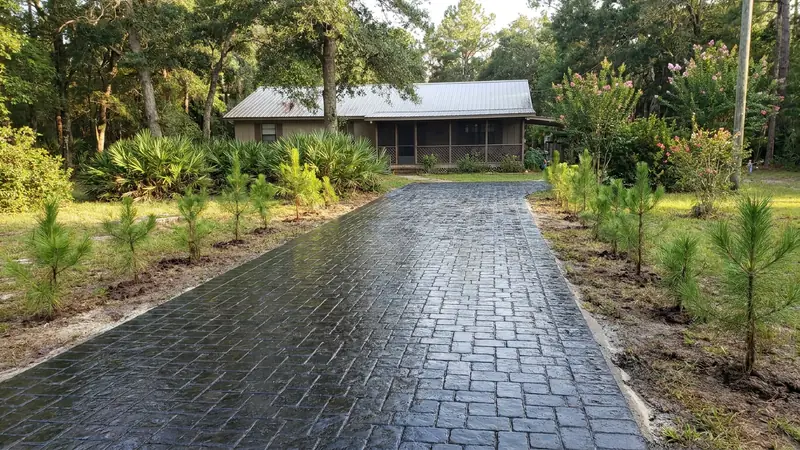
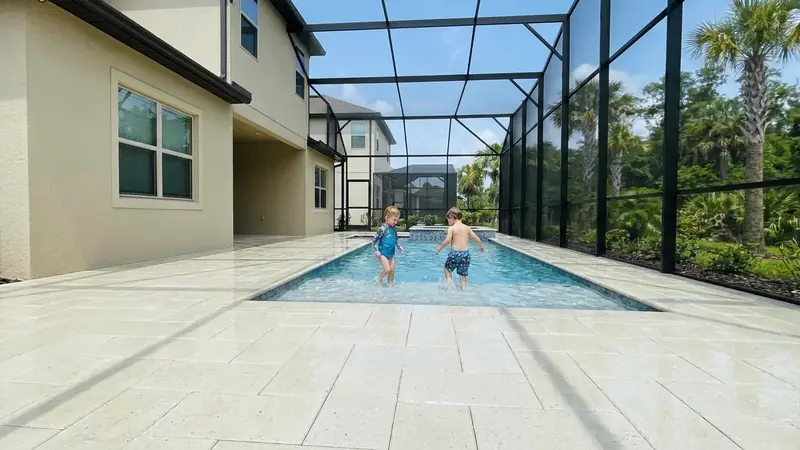
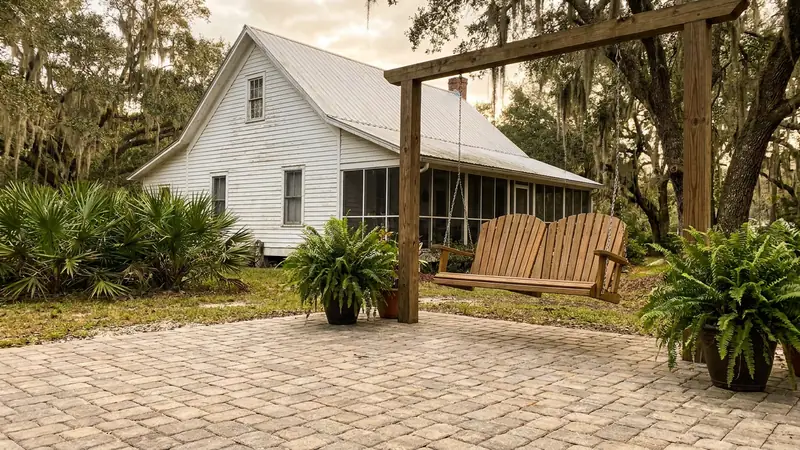
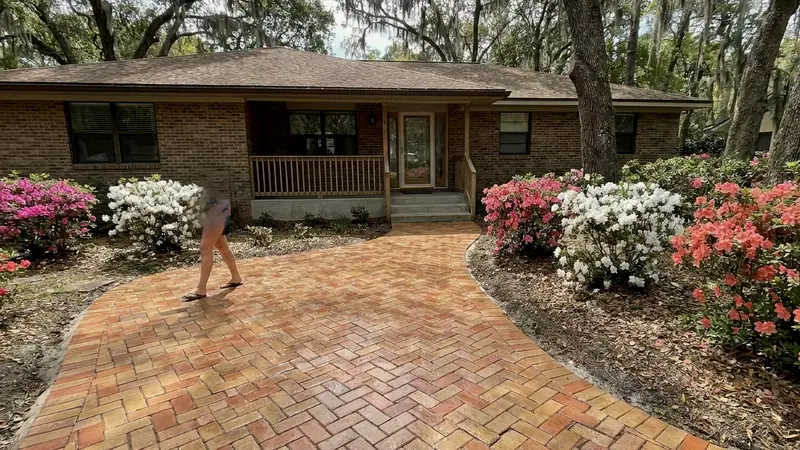
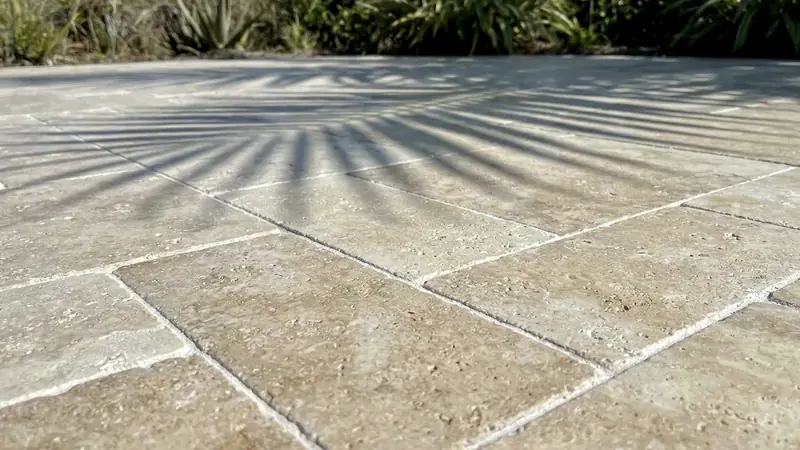
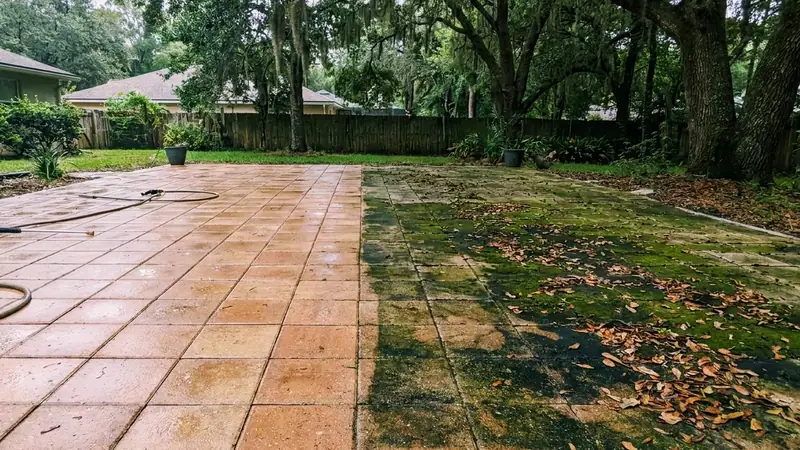
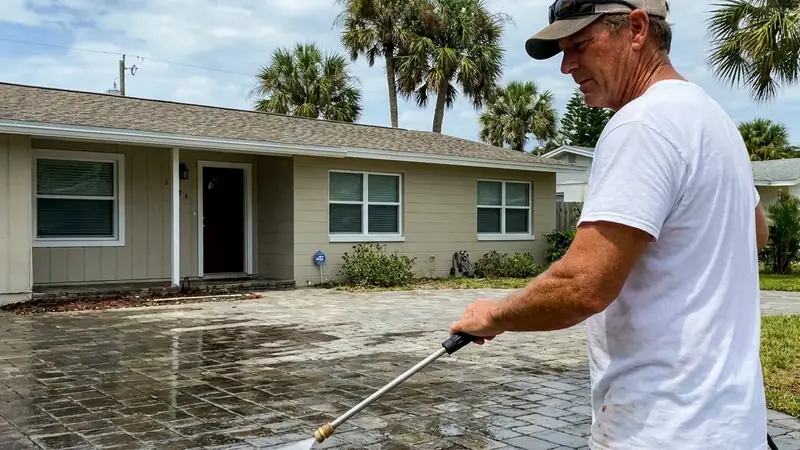
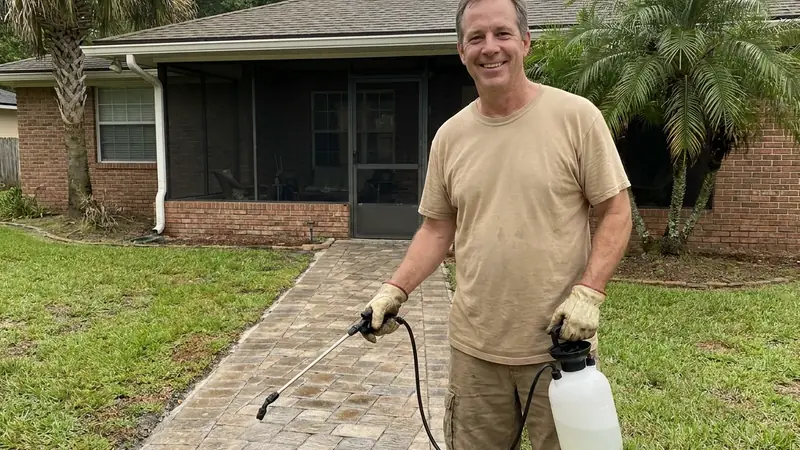
What do sealed pavers look like around Whitehouse?
Why local matters in Whitehouse
Whitehouse sits on the west side of Duval County, where flatwoods sand drinks water fast or holds it for weeks. A contractor who has worked here sees that coming. Joint sand and drying time both depend on it. To reach a contractor who works Whitehouse, call (904) 842-3763.
Out here the distance between jobs matters, and so does knowing the roads. A local contractor plans the route and the hours of work around your lot. That keeps the visit on schedule. You can ask for a free estimate online and ask how the day would be laid out.
Many Whitehouse homes went up between 1970 and 1999, and some are older or newer. Pavers added since then vary in age and in what was put on them. A local contractor checks the surface before choosing a product. If you cannot recall the history, ask for a free estimate online and say so.
Is there local history in Whitehouse that shows up around my property?
Yes, because Camp Milton Historic Preserve sits nearby on Halsema Road North. In early 1864 three miles of earth and timber fortifications went up along McGirts Creek, and more than 8,000 troops came to hold the line. The preserve covers about 270 acres and holds the midpoint of the 15-mile Jacksonville-Baldwin trail. If you live near the creek, ask for a free estimate online and name the road.
Whitehouse Elementary dates to 1926, when it opened as school number 51, and Whitehouse Park on General Avenue covers 17.96 acres. Naval Air Station Cecil Field began in 1941 and closed in 1999, with about 2,500 of its acres at the outlying field in Whitehouse. Near any of these Whitehouse places, call (904) 842-3763 and name your street.
John Harvey built a home on the Camp Milton site in 1884. When the state bought the land for Whitehouse Field, he moved the house into the town of Whitehouse. The preserve's earthworks were meant to block Union advances along Old Plank Road and the railroad toward Baldwin. If your property is near Old Plank Road, ask for a free estimate online.
Frequently Asked Questions
Is it good to seal pavers in Whitehouse, Florida?
Usually, yes. A coat slows fade on a sunny drive and helps keep sand in the joints, which counts on loose ground like Whitehouse. It wears, though, so expect to renew it. Sealed joints also leave weeds little to grip. On a long Whitehouse drive in full sun the benefit is easy to see.
How much does it cost to clean and seal pavers in Whitehouse?
Count on about $1.75 to $3.25 for every square foot cleaned, sanded and sealed, the published range for the region. Your Whitehouse number depends on size, joints and any old coat to strip. Make sure each quote shows the total area. A long drive plus a walk and a patio adds up faster than most owners expect. Rural lots often have extra surfaces, such as a walkway to a side door or a carport pad, so the total area can surprise you.
How long do paver sealers last in Whitehouse?
Most local quotes run two to five years between coats. Sun and heavy use shorten that, and shade can stretch it. Once water soaks in fast instead of beading, plan a new coat. A bare drive in full sun is the first place to check. Shaded walks near the house often stay in good shape longer than a sunny drive.
What industry is near Whitehouse, and does it matter for my pavers?
Cecil Commerce Center, the former Naval Air Station Cecil Field, is an industrial park where Boeing and Northrop Grumman run former military maintenance facilities. It has no effect on how your pavers are sealed, since the same steps apply on every lot. It does help explain why this part of Jacksonville has long stretches of open land, and why many lots are wide.
Can well water stain my Whitehouse pavers?
Yes. Iron runs high in most Florida well water, UF experts say, and orange stains often follow irrigation with it. The contractor treats rust before sealing, since sealer would lock a stain in. A deep mark may stay faintly visible, so ask what to expect. Moving the sprinkler head by a foot can keep the next stain from forming.
Will sandy soil make my Whitehouse pavers sink?
It can play a part. Sealteam Jax says sinking and washouts are the main reason pavers fail, since storm water carries off joint sand and erodes the base. The contractor resets sunken pavers before sealing, because sealer preserves a dip. Pointing out low spots on your first call saves a return trip. A seasonal check of the joints is cheap insurance.
Will ants and weeds come back after my pavers are sealed?
Less often, though not never. A Jacksonville company says ants need loose joint sand, and sealing locks the sand in so the joints are harder to tunnel. Full, sealed joints leave weeds little room, but a worn-out coat can let them return.
Can new sealer go over the old sealer on my Whitehouse pavers?
Not always. Mixing sealer types fails, because water-based will not bond over solvent-based, and oil-based coats come off before anything new goes on. Before choosing, the contractor looks at what is on the surface. An old receipt, a label or a photo of the surface helps.
Nearby areas we serve
Ready for a Free Estimate in Whitehouse?
Call (904) 842-3763 and tell us about your pavers.
Free, no obligation