
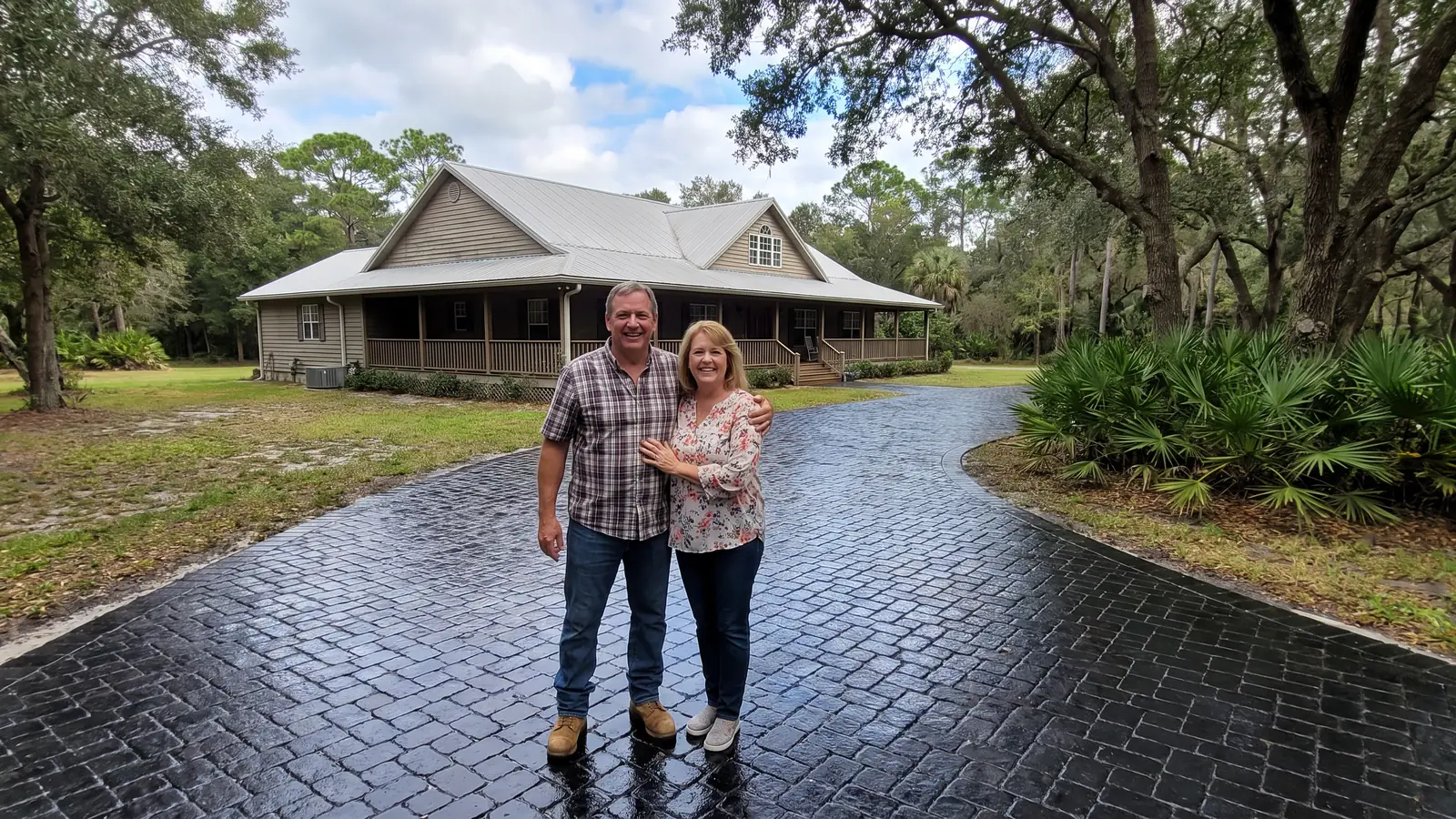
Paver sealing for Sandalwood homes
Paver Sealing in Sandalwood, FL
Sandalwood pavers new and old can get a free sealing estimate, so call (904) 842-3763 and say when they were laid.
- Brings out deeper paver color
- Fresh joint sand helps lock pavers in place
- Gives weeds less room to grow
- Makes the surface easier to keep clean
- Free estimate, no obligation
Request a Free Estimate
Free, no obligation.
Fast, careful paver sealing in Sandalwood
Paver sealing is available across Sandalwood, from the first streets built in 1960 to the newer homes in Sandalwood East. The estimate is free, and the job covers the wash, fresh joint sand and sealer for a drive, walk or patio. Reach out and a reply comes inside 1 business day, and usually much sooner. Call (904) 842-3763 to start.
Maybe your driveway was fine for years and now the color has gone flat and tan. Sand is working out of the joints, and tire lanes look worn. A wash, fresh sand and a new coat make it look like one even surface again. If you would rather write first, you can ask for a free estimate online.
Why hire a local paver sealing contractor in Sandalwood?
Sandalwood mixes homes from 1960 with streets finished after 1999, so no two driveways need quite the same plan. To talk through yours, call (904) 842-3763. The estimate is free.
Price first, decision second
A local contractor inspects your Sandalwood drive or walk and states a price. Whether to go ahead is entirely up to you.
A range to check against
Check any Sandalwood bid against the usual $1.75 to $3.25 per square foot. One far outside it is worth a question.
Old or new, both covered
Sealing a 1970s driveway and timing a brand-new one are different jobs. Tell the contractor your pavers' age. That is the first thing the contractor asks.
Quick turnaround on answers
Send a quote request and a reply lands inside 1 business day, usually much sooner. You pick the day that fits.
Get Your Free Estimate in Sandalwood
Tell us about your pavers in Sandalwood.
Free, no obligation
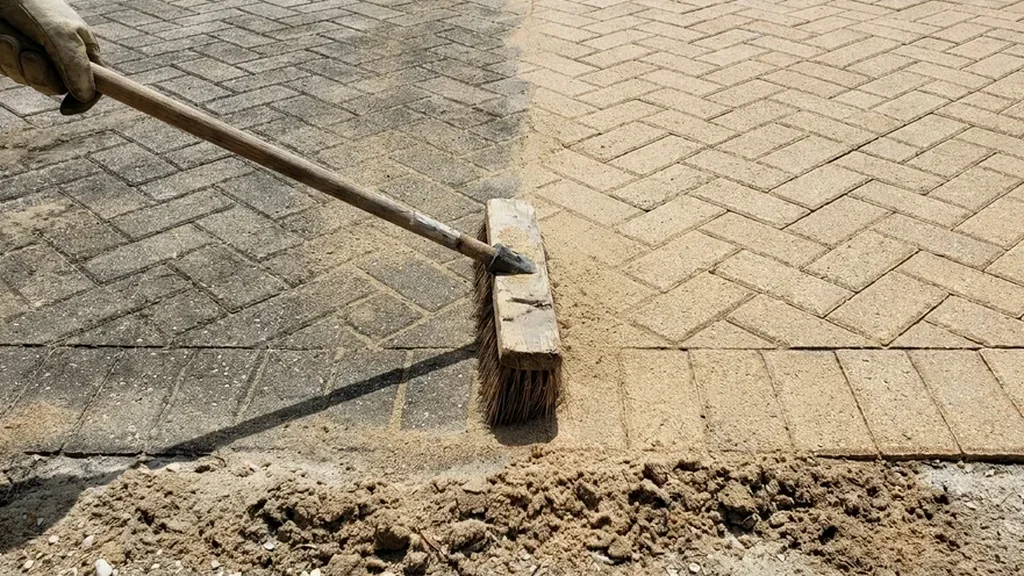
What paver problems show up most in Sandalwood?
Pavers added long after the house
A real estate profile puts the median Sandalwood home at 1973, and plenty of owners added pavers later. Nobody may know who laid them or what base went under them. A paver maker says a weak or poorly compacted base is a leading cause of sinking and shifting. Sealer locks a surface in as it is, so low or lifted spots are reset first. If your pavers rock underfoot or dip near the garage, mention it when you ask for an estimate, so the repair is priced before the day of the job. Pavers on a weak base may need repair work before any sealing is worth the cost. Sandalwood homes were built from 1960 to 2019, so pavers on one street may come from many installers and many decades.
New pavers that must wait
In the Sandalwood East tract, 78.2 percent of the homes went up after 1999, and some driveways are brand new. A paver company says new pavers should wait about 60 to 90 days before sealing. That gives moisture time to escape and white haze time to show up so it can be treated first. Sealing too soon can lock the haze in. A contractor who looks at the pavers first can say whether to wait or go ahead, and a reply to your request arrives within one business day. The newer streets of Sandalwood East are where you are most likely to find a driveway that is only months old.
Sun that bleaches bare pavers
Unsealed concrete pavers, says a Jacksonville paver company, show noticeable fade after 3 to 5 years of local sun. Color that looks flat or chalky in full sun is one sign a driveway is ready for a coat. The fade is slow, so it is easy to miss until you compare your driveway to a neighbor's. A fresh coat gives the pigment cover from the sun. Pressure washing alone fixes the look for a few months, so the coat is what keeps the result. A contractor can compare a shaded corner with the open driveway to show how much color has faded.
Driveways in constant use
Walk Score rates Sandalwood car-dependent, with almost every errand needing a car. That means tires turn on the same patch of driveway every day. Oil drips and tire marks build up there, and a wet look finish shows wear in drive lanes first. Some marks lift in a wash, and others fade only part way. Oil that sat for years is harder to lift than a fresh drip, and a sealed surface sheds new spills more easily. That wear is normal on a driveway that serves a car every day. For a busy drive, some owners lean toward matte for that reason.
Summer rain bound for the creek
Jacksonville gets about 52 inches of rain a year, most of it in short, heavy summer bursts. Pottsburg Creek, fed by storm drains and retention ponds, drains much of this part of town. Rain that runs across a driveway tugs sand from the joints and carries it toward the street. Low joints then let in weeds and ants. A fresh coat helps lock the new sand in place once it has been swept in. Sand piles up at the curb, and the thin joints left behind are where weeds start.
Which comes first in Sandalwood, sealing new pavers or cleaning old ones?
It depends on the age of the pavers. On older homes, cleaning and fresh sand come first, since years of sun and tires have worn the surface. On newer homes, timing comes first, because brand-new pavers should wait about 60 to 90 days. Tell the contractor which one fits when you ask for a free estimate online.
Sandalwood started in spring 1960, and its homes run from 1960 to 2019. The median is 1973, and the median home is about 1,388 square feet. One street can hold a 1960s driveway beside a newer one. Describe yours when you call (904) 842-3763.
Pearce-Uible, the builder behind Sandalwood, also built Southside Estates, San Jose and Arlington Manor. Each owner then added pavers at a different time. That is why two neighbors can need two different jobs. Your street name is all the contractor needs to place you, so add it when you ask for a free estimate online.
What does paver sealing cost in Sandalwood?
Sandalwood quotes tend to follow the $1.75 to $3.25 per square foot that companies in this region commonly publish to clean, sand and seal. A small walkway can run higher per foot than a wide driveway, since setup time is spread over less ground. To get a figure for your lot, ask for a free estimate online.
Heavy algae, deep oil stains and sealer that has turned white all raise the cost, because each needs more work before the coat. White or flaking sealer must be stripped first. A new driveway with clean pavers is often the simplest to price. Call (904) 842-3763 for a free estimate.
| Paved area | Typical example | Clean, sand and seal |
|---|---|---|
| 300 sq ft | Small patio or walkway | $525 to $975 |
| 600 sq ft | Two car driveway | $1,050 to $1,950 |
| 1,000 sq ft | Large driveway or pool deck | $1,750 to $3,250 |
| 1,500 sq ft | Driveway plus pool deck | $2,625 to $4,875 |
Math based on the $1.75 to $3.25 per square foot that Northeast Florida paver companies publish. Your contractor sets the actual price after seeing the surface. Repairs, leveling and stripping failed sealer are usually extra.
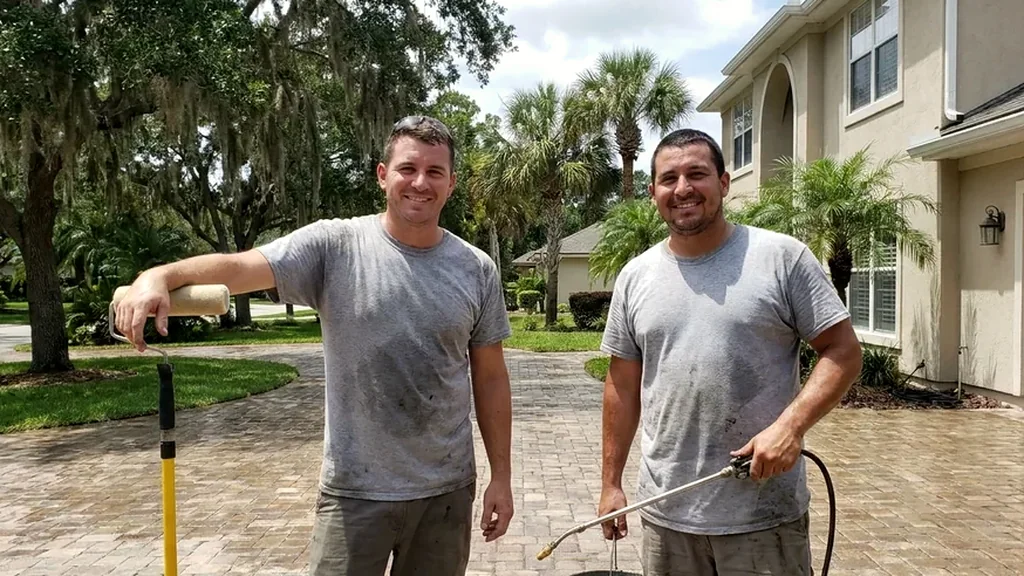
How does a paver sealing job work in Sandalwood?
Find out how old the pavers are
The contractor asks when the pavers were laid, since a 1970s driveway and a brand-new one need different plans. The surface is checked for dips, loose edges and joints that have run low. Any past sealer matters too, since a solvent-based coat rules out a water-based one on top. If you know who laid them, that helps, and if you do not, the contractor reads the surface instead. Sandalwood driveways come in every age, so the plan is built around yours.
Wash without harming the joints
The wash lifts tan dirt, tire marks and oil from the drive lanes. High pressure can loosen joints and dislodge sand, so it is kept in check. Rust from sprinklers on well water may need extra care, since most Florida well water carries iron. Stains that outlast the wash are flagged before any sealer goes on.
Give the pavers time to dry
Fully dry pavers come before any sealer. Expect a pause of 24 to 48 hours after the wash, a figure one Jacksonville page gives. Damp pavers are the usual cause of white, blotchy coats. The contractor watches for the afternoon storms that often roll in. If the pavers are still damp the next morning, sealing waits.
Re-sand the gaps
New sand replaces what rain carried toward the street, filling each joint level with the surface. A packed joint gives weeds and ants little room and gives the sealer something to grip. Pavers laid with play sand may need a second look at the joints. Loose grains are brushed off before the coat goes down. This step matters most where storms have been carrying sand toward the curb.
Spray, back-roll and wait
Sealer is sprayed on and then back-rolled for an even finish. Walking on the coat is usually fine after a few hours, and parking waits about a day. Plan where to leave the car in the meantime. A final walk with you lets you check the finish and ask how often to plan a repeat visit.
Complete paver services in Sandalwood
On older Sandalwood driveways, the job runs wash, dry, sand, seal. The wash clears years of tan dirt, and fresh sand goes into thin joints. Sealer goes on last, once the pavers are bone dry. To ask how that plays out on your driveway, call (904) 842-3763.
On a new driveway, the first question is timing. A contractor can look at the pavers and tell whether haze or moisture means waiting. Walkways and patios follow the same rules as the drive. When you ask for a free estimate online, say when the pavers were laid.
Picking a sealer means picking a base and a look. Water-based and solvent-based are the two bases, and an old solvent coat rules out water on top. Matte keeps the natural color, while a wet look deepens it and shows tire wear sooner. You can ask for a free estimate online and ask which suits your pavers.
One company says its process takes two days to clean and seal, with about 24 hours for the sealant to dry. Two to five years is a typical quoted span between coats. Summer storms can move the day, so the contractor checks the forecast. To pick a date, call (904) 842-3763.
Questions to ask before you hire
- Do you cover my plants and the edge of the lawn before spraying?
- How long should I keep cars off the driveway after the sealer goes down?
- How many days do I need to leave open for the job and the cure time?
- Will you tell me the sealer's brand and finish before the day of the job?
- How much will a satin or wet look finish change the color of my pavers?
- What do you do about weeds growing up through the joints before sanding?
- How do you handle pavers that have sunk or lifted near a tree root?
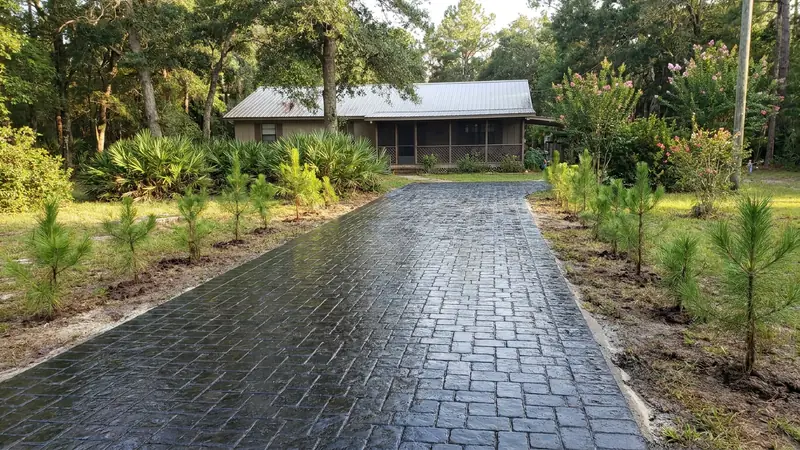
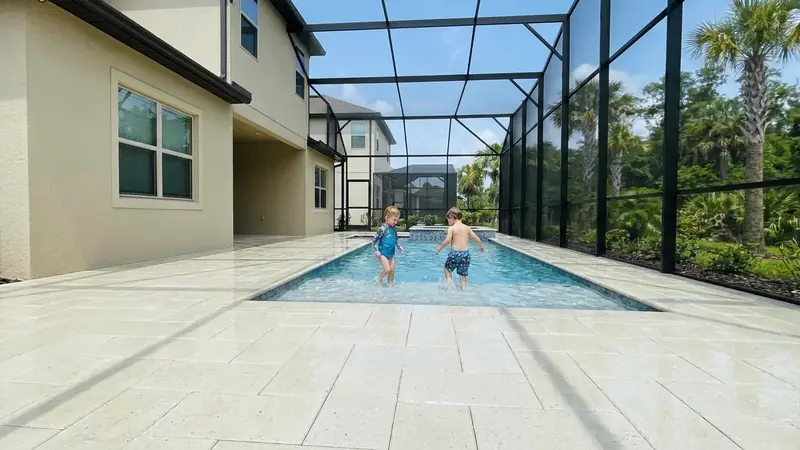
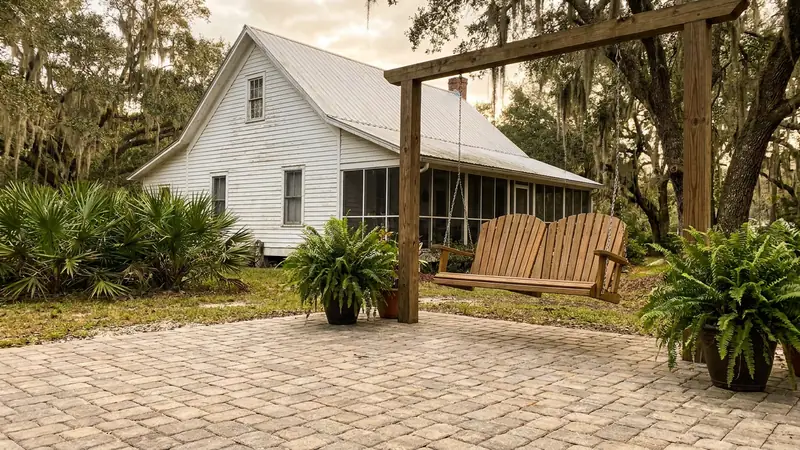
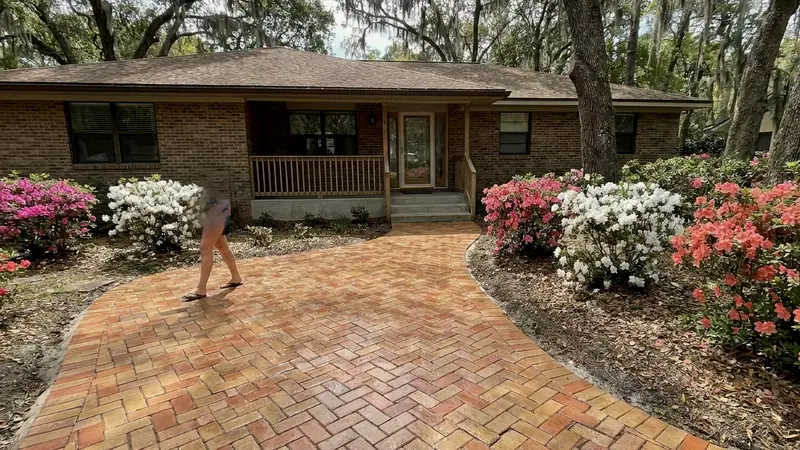
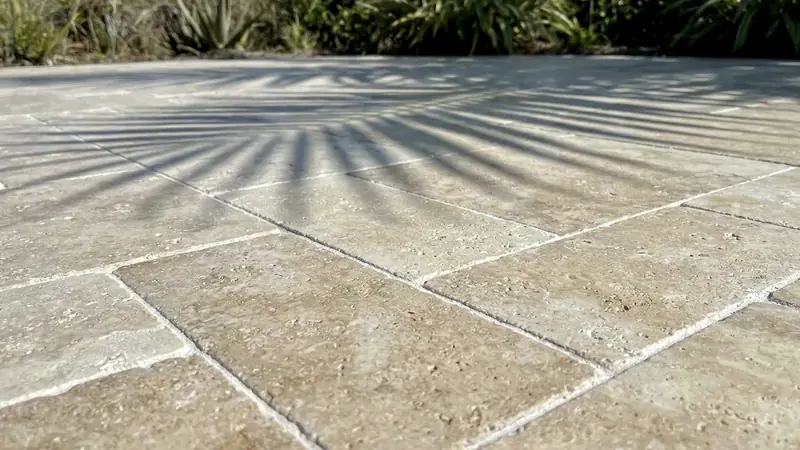
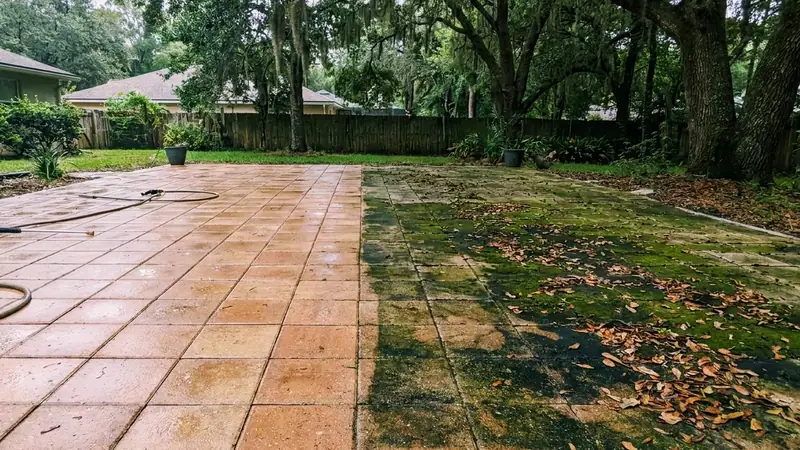
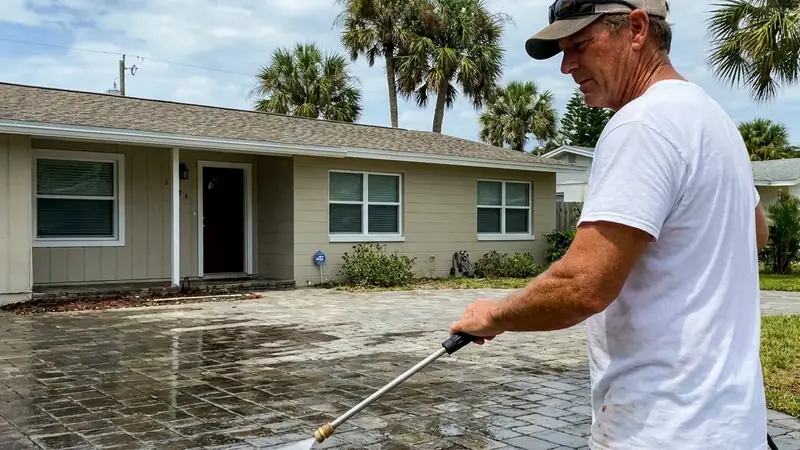
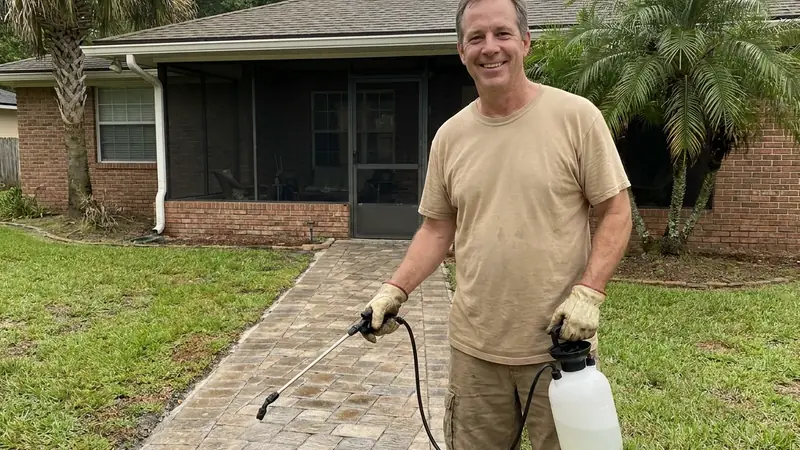
What do sealed pavers look like around Sandalwood?
Why local matters in Sandalwood
A contractor near Sandalwood knows the area was built in stages, from 1960 on. Asking when your street went in tells the contractor a lot about your pavers. That saves guesswork at the estimate. To ask who works the Sandalwood side of Jacksonville, call (904) 842-3763.
Local also means knowing the roads. Butler Boulevard is 13 miles long and a major commuter route, and Sandalwood sits in its Southside stretch. Naming a cross street helps your contractor find you. You can ask for a free estimate online and name yours.
Rain has the last word. Sandalwood gets short, heavy summer storms, and sealer needs a dry surface. A contractor who works nearby can adjust the day when rain shows up. Call (904) 842-3763 to ask how that works.
Where is Sandalwood, and what can I name when I call a contractor?
Sandalwood is a Southside neighborhood about halfway between downtown Jacksonville and the beaches, roughly 6 miles from each. It began developing in 1960 under the builder Pearce-Uible, and Sandalwood High School opened there in 1971. Naming the school or a cross street helps your contractor place you when you ask for a free estimate online.
The area grew after the Mathews Bridge opened in 1953, when the Arlington side expanded for two decades. Butler Boulevard is a 13 mile road between Philips Highway and A1A. Pottsburg Creek drains much of this part of town into the Arlington River. If your street is near any of these, say so when you call (904) 842-3763.
Frequently Asked Questions
Is it good to seal pavers in Sandalwood?
Yes, in most cases. Local sun can fade bare concrete pavers within 3 to 5 years, one Jacksonville company says. Sealing slows that fade and holds the joint sand in place, and a sealed surface wipes clean more easily later.
Do pavers need to be clean and have fresh sand before sealing?
Yes. Sealer over dirt or empty joints gives a poor coat, which is why the work is quoted as clean, sand and seal. The contractor washes, lets the pavers dry, refills the joints and then seals. Skipping a step shows up later as weeds, haze or peeling.
How long do paver sealers last in Sandalwood?
In Sandalwood, plan a recheck somewhere in the two to five years that companies quote between coats. For a driveway in full sun, one Jacksonville company says to plan on 18 to 24 months. Water that soaks in instead of beading is a sign the coat is thin.
Why is paver sealing so expensive?
Most of the hours go to getting the pavers ready. One company's math is two to three hours of prep for each hour of sealing. Washing, drying and re-sanding come before the sealer, and good weather has to hold.
How much does paver sealing cost in Sandalwood?
Prices in the $1.75 to $3.25 per square foot range are what regional companies commonly publish for the full clean, sand and seal. Smaller jobs often cost more per foot. A written area in square feet keeps the bids comparable. The estimate is free, and it carries no obligation.
Can I seal brand-new pavers right away?
Usually not. A St. Augustine area company says brand-new pavers should wait about 60 to 90 days so moisture can escape and any white haze can be treated. A look from the contractor comes first. Ask for a small test spot if you are unsure about the finish.
How long should I stay off a sealed Sandalwood driveway?
Plan to keep the car off it for about a day, though feet are fine after a few hours. One company says the full process takes two days, with about 24 hours for the sealant to dry. Your contractor can give you the exact window.
Will sealing remove oil and tire marks?
Washing may lift some of them, and others fade only part way. Sealing does not remove stains, but it helps new spills wipe off more easily. The contractor points out any marks that will not fully lift before sealing.
What if my driveway has an old coat that is turning white?
White or flaking sealer must be stripped first, according to a Jacksonville cost guide. Damp pavers or too much product are the usual causes. Stripping adds work, so it can raise the price.
Is a driveway from the 1970s worth sealing?
Usually yes, if the pavers are sound. The median Sandalwood home dates to 1973, and many owners added pavers later. The contractor resets any sunken or lifted spots first, since sealing keeps the shape the pavers are in. A paver maker says a weak base is a leading cause of sinking, so ask about repairs before you pay for a coat.
Does a car-dependent neighborhood wear driveways faster?
Sandalwood scores 14 on Walk Score, which calls it car-dependent. A driveway that serves a car every day shows wear first in the tire lanes. A wet look shows that wear sooner, while matte hides it longer. Pick by how hard your driveway works.
How do I know if my Sandalwood pavers are too new to seal?
Think about when they were laid. A St. Augustine area company says to wait about 60 to 90 days, so moisture can leave and any white haze can show up. If the pavers went in a few weeks ago, tell the contractor when you ask for an estimate. A quick look at the surface settles the question.
Nearby areas we serve
Ready for a Free Estimate in Sandalwood?
Call (904) 842-3763 and tell us about your pavers.
Free, no obligation