
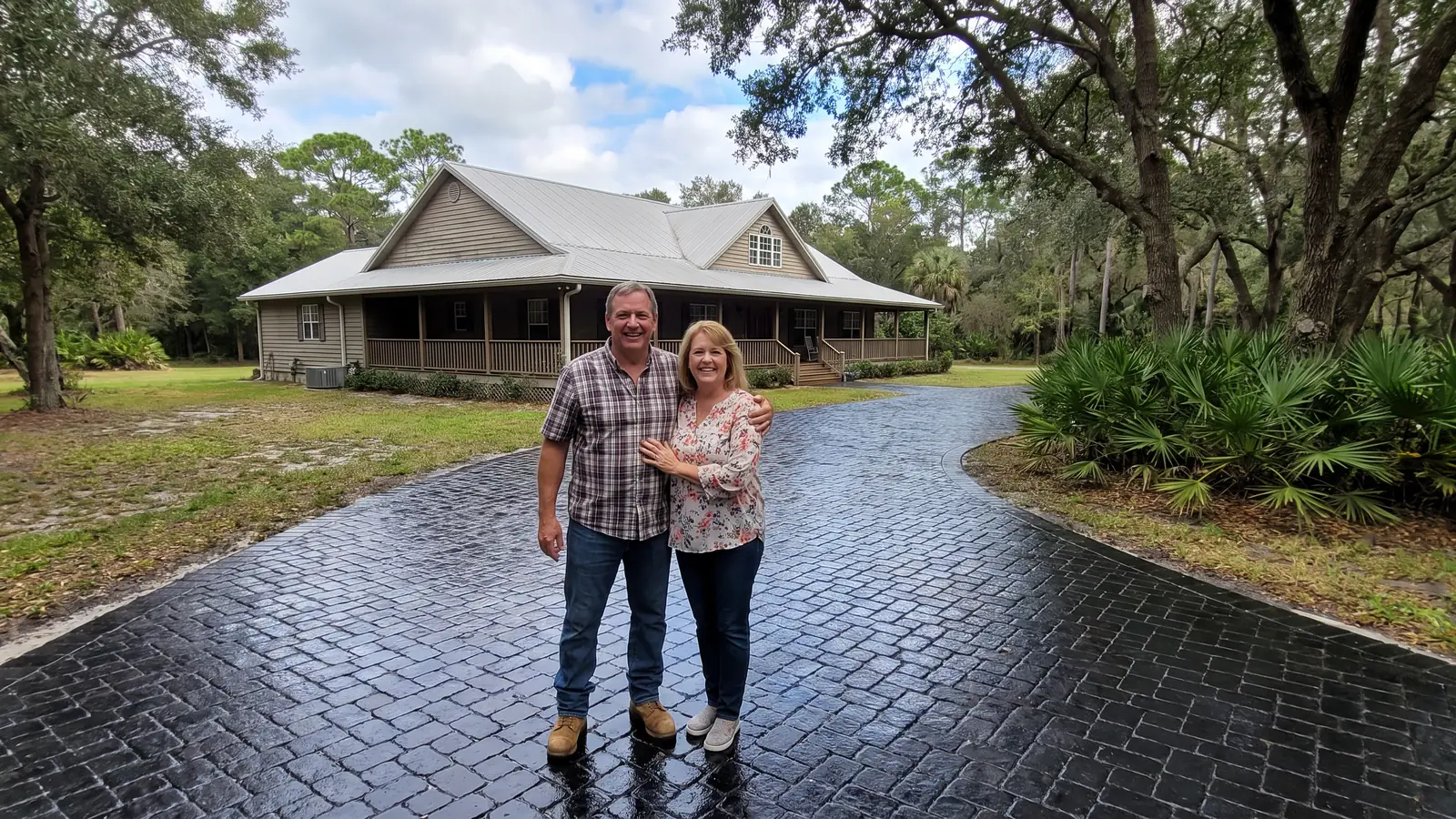
Paver sealing for Arlington homes
Paver Sealing in Arlington, FL
Arlington's mid-century ranch homes have long drives under live oaks, so call (904) 842-3763 for a free paver sealing estimate.
- Brings out deeper paver color
- Fresh joint sand helps lock pavers in place
- Gives weeds less room to grow
- Makes the surface easier to keep clean
- Free estimate, no obligation
Request a Free Estimate
Free, no obligation.
Fast, careful paver sealing in Arlington
Paver sealing is available across Arlington, from the older streets near Jacksonville University to the neighborhoods around Lake Lucina. A local contractor washes, re-sands and seals pavers on driveways, walkways and pool decks, and the estimate is free. Use the link to ask for a free estimate online and look for a reply inside 1 business day, usually much sooner.
Look at your drive from the street. If you see brown streaks from the oaks, a gray cast on the pavers and weeds in the joints, you are in good company here. Washing, fresh sand and a new coat can bring back one even color, and a call to (904) 842-3763 is the way to start.
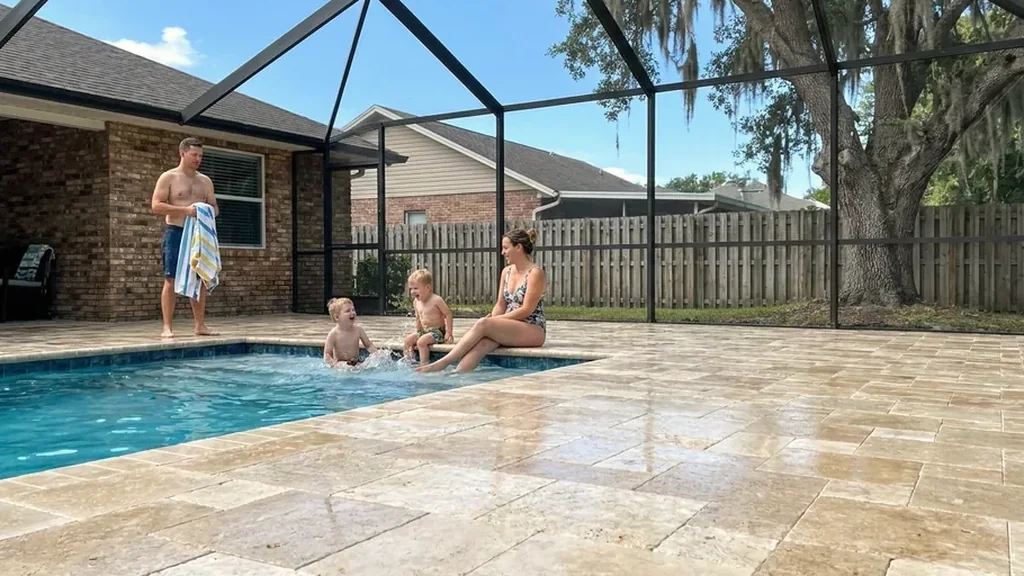
Why hire a local paver sealing contractor in Arlington?
Arlington was built for the car in the 1950s and 1960s, so long driveways and shady lots are part of the landscape. A local contractor knows how oak shade and sandy ground treat pavers here, so ask for a free estimate online and ask.
Free, and it stays free
The contractor comes by, studies your Arlington drive, walk and pool deck, and gives you a number. Nothing is billed for the look.
A range for the whole region
Clean, sand and seal is published at $1.75 to $3.25 per square foot. Use that as the yardstick for any quote you collect.
Tannin handled first
Brown oak stains are treated before any coat, so the sealer does not lock them in. Ask how it is done on your drive.
Gloss or calm, your call
Matte keeps a natural look and wet look deepens color. The contractor explains how each wears in drive lanes.
Get Your Free Estimate in Arlington
Tell us about your pavers in Arlington.
Free, no obligation
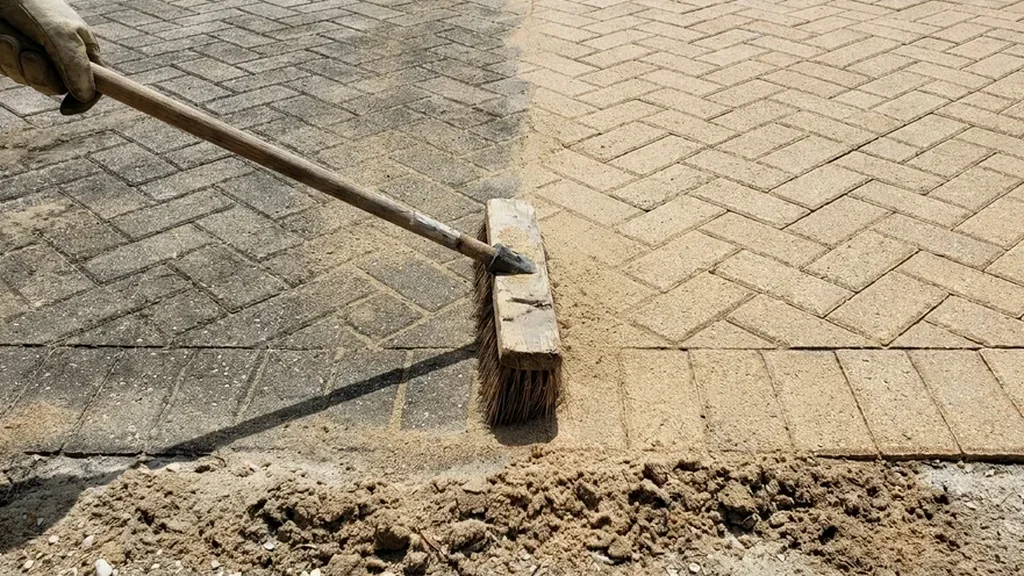
What paver problems show up most in Arlington?
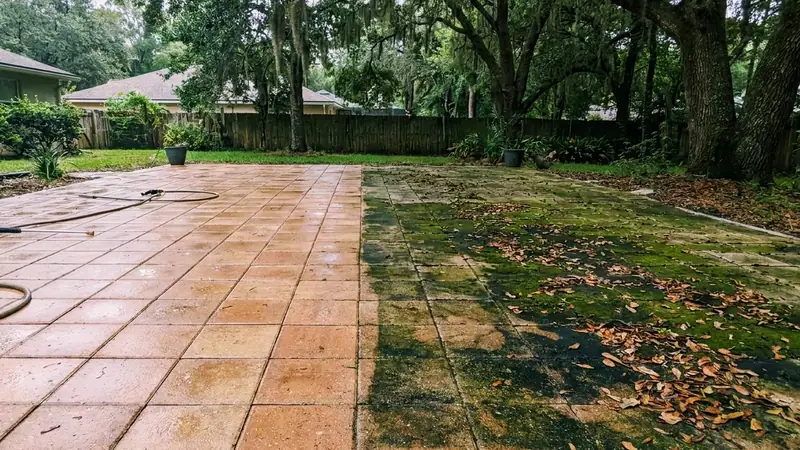
Brown streaks under the oaks
A First Coast cleaning company reports brown tannin stains on Arlington drives and walks wherever a live-oak canopy hangs overhead. Tree Hill Nature Center and the Arboretum's Live Oak Trail show how big the old oaks here can grow. Leaves on wet pavers leave the stain behind. Sealing after a wash keeps the next season's tannin from setting in, which means the drive is easier to rinse and stays one color longer. A deep stain may not come out fully, and the contractor will say so up front. Walks that run under the canopy are the first to darken after a wet week.
Joint sand that drains away
Regency Square Mall opened in 1967 on a former expanse of sand dunes, and the Arboretum site was strip-mined to barren white sand. The ground here is sandy, and joint sand washes out in summer downpours. Open joints widen, weeds root and pavers can shift. Sand is refilled after washing and before the sealer goes on, and once the joints are full and sealed they hold the pavers together far better. That is what stops the weeds from coming back every spring. Even a short drive can lose enough sand in one wet summer to start sprouting weeds.
Long drives that take the tires
East Arlington is described as ranch homes with long drives, fences and pool decks. Long drives mean more turning tires, and a Jacksonville paver company says weight and turning loosen joint sand. Wear in the drive lanes shows up sooner on a wet look than on matte. That is worth weighing when you pick a finish. If your drive carries two cars and a turning lane, matte is the quieter choice, and the tire marks fade into it. Neighbors with fences and tight turns often see the wear in the same spot every year.
Pool deck chlorine and sun
Safe Touch says two to three years between coats is typical in Arlington, shortened by full sun and pool chlorine. Pool decks here get both, plus splash, sunscreen and wet feet. Pavers that stay damp near the water also pick up algae. A sealed deck rinses cleaner and fades slower, which matters on a surface people walk on barefoot. Ask the contractor about slip and gloss before choosing a wet look near the water. Safe Touch describes East Arlington as ranch homes with long drives, fences and pool decks, so a deck often sits beside the drive.
Old sealer and unknown products
Many Arlington homes were built in the 1950s and 1960s, so the pavers have often been redone by a later owner. Cloudy white patches usually trace to sealing damp pavers or laying it on too thick. The contractor identifies what is on the surface first, because not every product can go over another. Some old coats have to be stripped, and that adds time and cost. Safe Touch notes that strip and reseal sits higher than a standard job when the old coat has failed.
What should Arlington homeowners know about their pavers by area?
It helps to know which part of Arlington you are in, since it was built in waves. Jacksonville University bought land in 1947, and the area grew faster than any other part of Jacksonville for two decades after the Mathews Bridge opened in 1953. River Forest is mostly 1950s and 1960s ranch homes of about 800 to 1,600 square feet, and no HOA was identified there. Tell the contractor your area when you ask for a free estimate online.
Woodland Acres lies between the Arlington Expressway and Atlantic Boulevard, along Pottsburg, Strawberry and Silversmith creeks. Lake Lucina, near Cesery Park, came from a subdivision William Cesery began around 1950. Lots near a creek can stay damp, which affects drying time and moss, so call (904) 842-3763 and mention any creek or pond behind your home.
Old Arlington still has many 1950s and 1960s houses with sharp edges and sloping roofs, and the area sits on higher ground than much of the county. Early residents valued that land for its views and drainage. Pavers on a rise often dry faster, but oaks overhead can change that, so ask about shade when you ask for a free estimate online.
Sandalwood's development began in spring 1960, and Regency Square Mall opened in 1967 on former sand dunes. Homes from those years often carry pavers added later, and the ground beneath them is sand. That is why settling and joint loss come up so often, so ask for a free estimate online to talk it over for your street.
What does paver sealing cost in Arlington?
Arlington pricing builds on a published range of $1.75 to $3.25 per square foot for cleaning, sanding and sealing. Arlington lots often combine a long drive, a walk and a pool deck, so total area leads the math. Tannin stains, empty joints and an old coat move it from there. To see where your yard falls, ask for a free estimate online, and the estimate is free.
A Jacksonville cost guide notes that small jobs run higher per square foot, since prep time stays the same as the surface shrinks. Access matters too, since stairs or a narrow side yard slow the work. Fenced Arlington yards with a back gate can fall into that group, as can a pool deck reached through a narrow side yard. Call (904) 842-3763 and the contractor can point out which spots on your lot take longer.
| Paved area | Typical example | Clean, sand and seal |
|---|---|---|
| 300 sq ft | Small patio or walkway | $525 to $975 |
| 600 sq ft | Two car driveway | $1,050 to $1,950 |
| 1,000 sq ft | Large driveway or pool deck | $1,750 to $3,250 |
| 1,500 sq ft | Driveway plus pool deck | $2,625 to $4,875 |
Math based on the $1.75 to $3.25 per square foot that Northeast Florida paver companies publish. Your contractor sets the actual price after seeing the surface. Repairs, leveling and stripping failed sealer are usually extra.
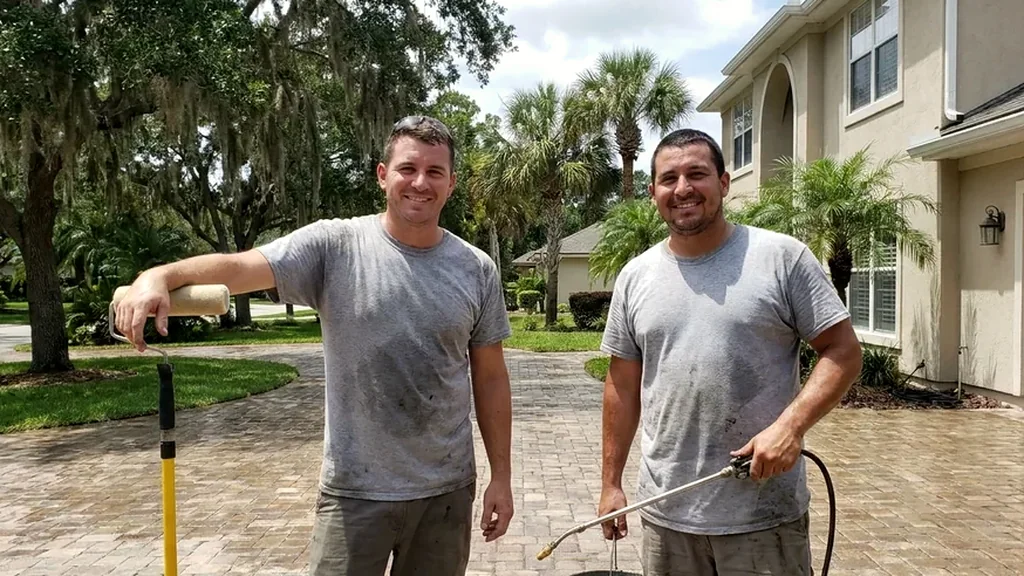
How does a paver sealing job work in Arlington?
Read the surface first
Before any water flows, the contractor reads the pavers. That means checking for stains, roots that have lifted a section, joints that have emptied and any coat already on top. Sections lifted by roots are repaired first, because sealing over them preserves the problem. Say whether a pool or sprinkler line touches the area, and you will hear the plan and the number before work starts.
Wash out the tannin and film
Brown stains from oak leaves, gray film and algae come off in this pass. Drips of oil and rust from sprinklers are pre-treated. Water stays clear of the house walls and pool plumbing. Shade from big oaks lengthens this stage, and stubborn marks may get a second round.
Sweep in silica sand
The wash removes joint sand, so silica sand goes back in before sealing. Arlington sits on sandy ground, and joints drain empty quickly in a heavy storm. Full joints keep weeds out and hold the pavers together. One last sweep takes stray grains off the top.
Wait out the wet
Sealer goes on only when pavers are fully dry. One Jacksonville page puts that at 24 to 48 hours after cleaning, and oak-shaded corners dry slowest. A coat applied too soon can turn white. If rain is forecast, the date shifts and you hear about it ahead of time.
Spray, roll and cure
Sealer goes on by sprayer and is back-rolled down into the joints. People can usually walk on the surface within hours, and cars wait about a day. Companies commonly quote two to five years per coat, though Safe Touch says two to three is typical in Arlington. Keep sprinklers off the pavers until the contractor says it is safe.
Complete paver services in Arlington
Arlington jobs follow a straight line: wash, refill, dry, seal. Sealing last means nothing dirty is trapped beneath the coat, and the finish looks even from edge to edge. The long drive is usually done in sections. Call (904) 842-3763 to hear how many hours each stage would run at your house.
Many properties here pair a long drive with a front walk and a pool deck. Drives take tires and oil, walks collect oak leaves, and decks take splash, sunscreen and chlorine. Each gets its own cleaning plan, with gentler handling near plants and screens. Tell the contractor which areas you want done when you ask for a free estimate online.
On the sealer itself, you choose between water-based and solvent-based, then matte or wet look. Matte hides wear in drive lanes and keeps the natural look. A wet look deepens color on a deck, though it shows scuffs sooner. An old solvent-based coat rules out water-based on top, so call (904) 842-3763 to sort out which suits your home.
Weather picks the date. Summer storms in Jacksonville are short but heavy, and sealer needs dry pavers. The driest stretch runs from November through April, so those months leave the most open days. For a date that fits your street, ask for a free estimate online.
Questions to ask before you hire
- What does the written estimate list if my pool deck has two kinds of pavers?
- How long should I keep cars off the driveway after the sealer goes down?
- Will you tell me the sealer's brand and finish before the day of the job?
- How do you handle pavers that have sunk or lifted near a tree root?
- Is the quote one price for wash, sand and seal, or are they billed apart?
- Can you clean off the rust stains from my well water sprinklers?
- What should I see on the finished surface that tells me the job was done right?
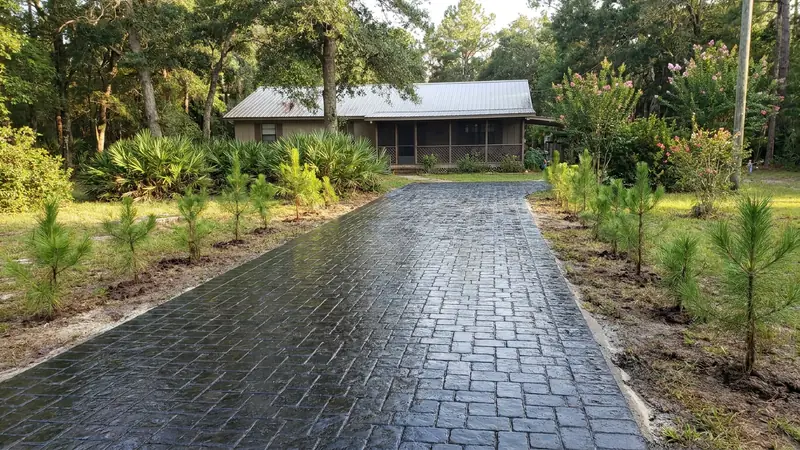
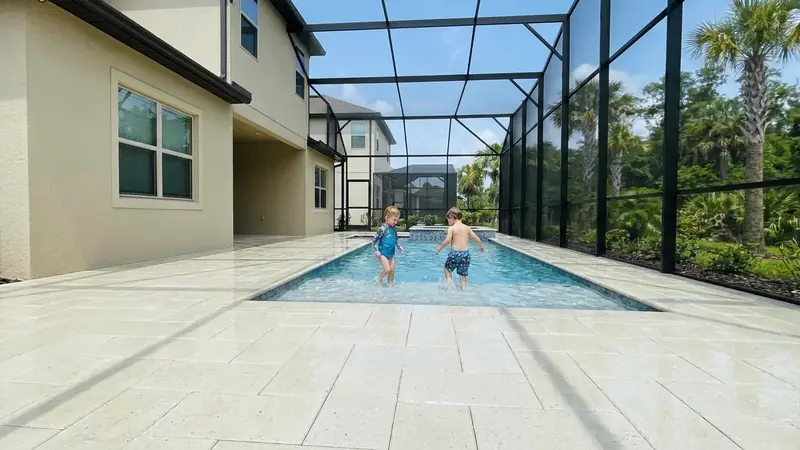
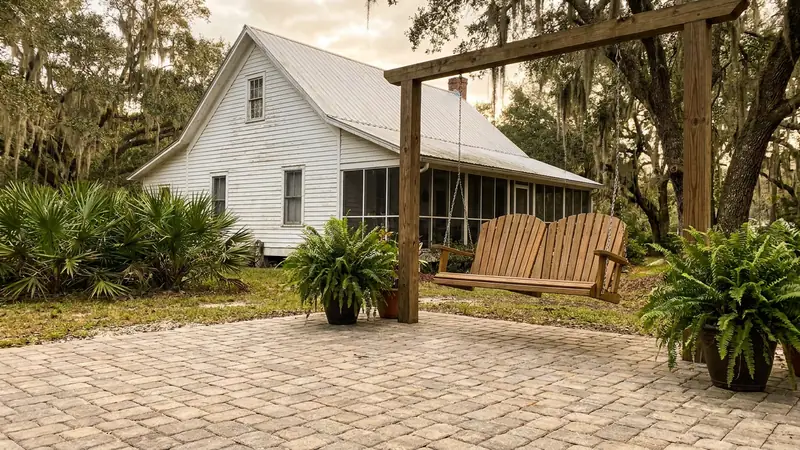
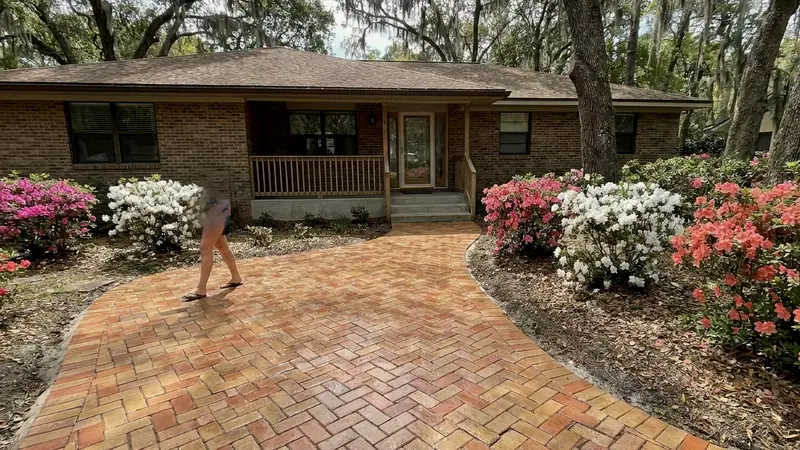
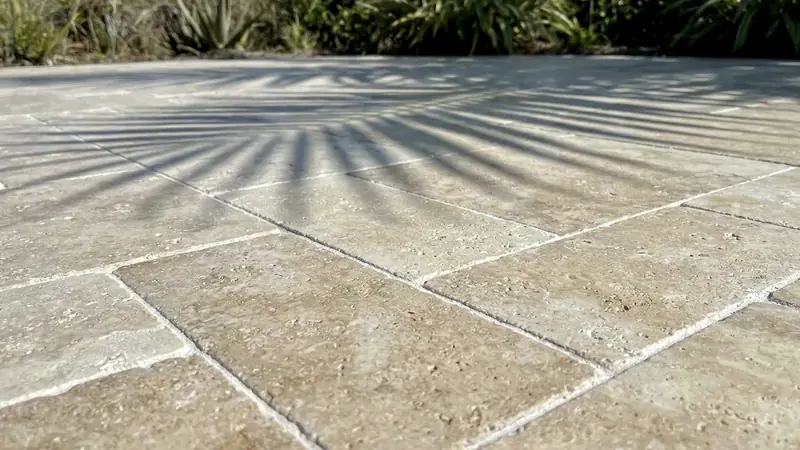
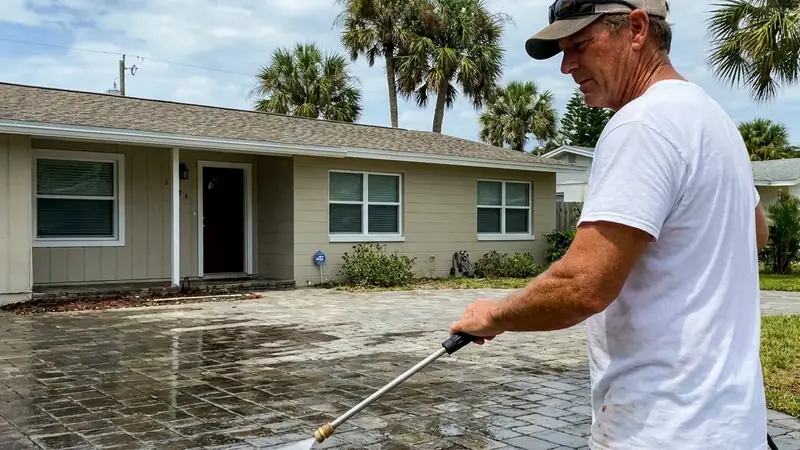
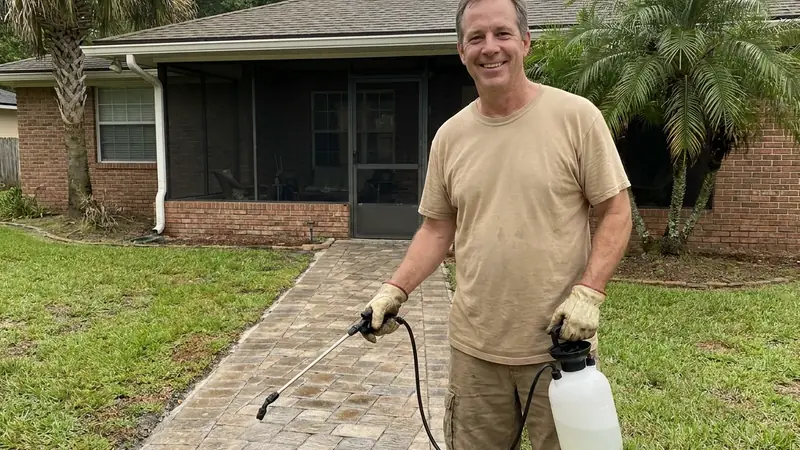
What do sealed pavers look like around Arlington?
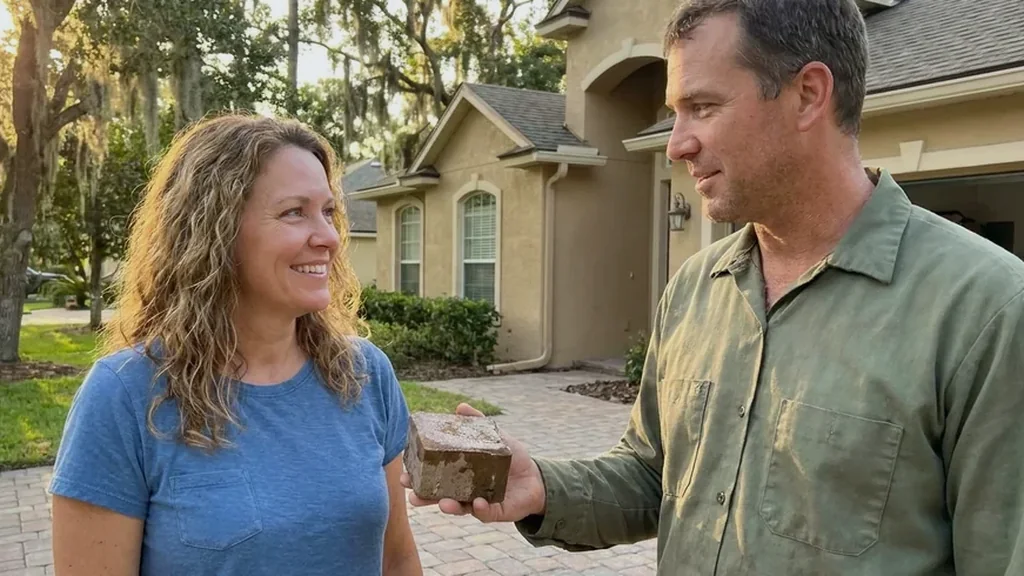
Why local matters in Arlington
A contractor who works Arlington knows its 1950s and 1960s streets, where long drives and mature oaks come together. That pairing is the reason brown tannin stains and green edges show up on so many pavers here, and it changes how a wash should go. Someone new to the area may treat the stain as plain dirt. To reach a contractor who works Duval County's east side, call (904) 842-3763.
Local experience also covers ground and water. Arlington sits on higher, sandy land, with creeks like Pottsburg and Strawberry draining the lower parts. A contractor who has seen both sides knows where pavers dry fast and where they stay wet, which saves a return trip. Ask how that shifts your date when you ask for a free estimate online.
Homes here span several decades of updates, so the pavers may carry a coat from a previous owner. A local contractor can often tell a recent job from an old one by sight and touch. If you cannot tell what is on yours, ask for a free estimate online and describe them, and hiring is never required.
Arlington covers about 64 square miles of land, so conditions change from the river bluffs to the creek flats. A contractor who works across it learns which streets sit high and dry and which stay damp. For a visit, call (904) 842-3763.
What is Arlington's history, and how does it affect my pavers?
Arlington is often called Jacksonville's first major post-war suburb built for the automobile. Developer Terry Parker began buying land around 1943, and Jacksonville University bought its campus in 1947. Many houses from that era still stand. If you live near the university and want a walkway quote, ask for a free estimate online.
Tree Hill Nature Center at 7152 Lone Star Road opened as a city park in 1971 and has a 300-year-old oak. The Arboretum's Live Oak Trail has trees over a century old, and Atlantic Boulevard, finished in 1910, started out only 18 feet wide. Close to the park, the university or the oak trail, call (904) 842-3763 and name your street. Floral Bluff Plantation was established in 1832, which shows how long people have lived along this shore.
Pottsburg Creek, a 16 mile urban creek, runs through the southern part of Arlington and empties into the Arlington River. Rainwater and storm drain runoff feed it. Lots beside a creek can stay damp, and damp pavers grow green. If that sounds like your yard, ask for a free estimate online.
The Mathews Bridge was built from 1951 to 1953 and runs 7,382 feet, and the Arlington Expressway was built in the 1950s as part of State Road 115. Together they opened Arlington to commuters by car. Near the expressway or the bridge approach, call (904) 842-3763 and name your street.
Frequently Asked Questions
Is sealing pavers a good idea in Arlington?
In most cases it pays off. Sealer cuts sun fade, oak stains and washed-out joint sand. Arlington's shady drives and pool decks take plenty of wear, and a sealed surface rinses clean more easily, though it will need renewing in a few years.
How long does paver sealer last in Arlington?
Two to five years per coat is the range companies commonly quote. Safe Touch says two to three years is typical here, shortened by full sun and pool chlorine. Water that beads on the surface means the coat is still doing its job.
How much does it cost to have pavers cleaned and sealed in Arlington?
Arlington jobs get measured against a published range of $1.75 to $3.25 per square foot for cleaning, sanding and sealing. Tannin stains, old sealer and missing sand decide where a job falls. Ask the contractor to put the total square footage on paper.
Why is paver sealing so expensive in Arlington?
Prep is where most of the cost sits, not the sealer. Cleaning, refilling joints and stripping failed sealer take hours before any coat goes on. A long Arlington drive plus a walk and a pool deck adds area, which raises the total.
Do oak tannin stains come out before sealing on an Arlington drive?
Usually they can be pre-treated, though a deep stain may not lift fully. Sealing afterward helps keep next season's stain from setting in. The contractor will tell you what to expect after the first look.
Why do my Arlington pavers turn brown under the oak trees?
The brown is oak tannin, which leaves a stain when wet leaves sit on pavers. A First Coast cleaning company says Arlington drives and walks under a live-oak canopy get these stains. A wash lifts most of it, and sealing afterward makes the next round easier to rinse.
Can pool deck pavers in Arlington be sealed?
Yes. Pool decks take sun, splash and chlorine, and Safe Touch says those shorten the span between coats here. The deck is cleaned, the joints are refilled, and sealer goes on once the surface is dry. Matte is often chosen where people walk barefoot.
Should I pick wet look or matte for my Arlington pavers?
Wet look gives deeper color on a deck, while matte keeps a natural look on a drive. Wear in the drive lanes shows up sooner on a wet look. Switching to another finish down the road generally calls for stripping the old sealer.
How soon can I drive on my Arlington pavers after sealing?
A Jacksonville paver company says people can walk on the pavers within a few hours, with cars kept off about a day. Weather and sealer type change that. Ask the contractor for the exact wait.
Will sealing keep brown oak stains from coming back on my Arlington walk?
It helps. Safe Touch says a sealer on pavers keeps the next season's tannin from locking the stain in. Leaves still stain wet pavers, but a sealed surface rinses clean far more easily.
Does Arlington's higher ground help my pavers dry faster?
Sometimes. A MetroJacksonville history says some of Arlington's land sits higher than the rest, which gave early residents excellent drainage. Pavers on a rise often dry faster, but a big oak overhead can still keep a walk damp.
Does Arlington's sandy ground make my pavers settle?
It can. The USDA describes the Ortega soil series as fine sand more than 80 inches deep with rapid permeability, and Regency Square Mall was built on former dunes. Sandy ground drains fast but shifts, so low spots are reset before the coat goes on.
Nearby areas we serve
Ready for a Free Estimate in Arlington?
Call (904) 842-3763 and tell us about your pavers.
Free, no obligation